31 अक्टूबर 2026
Rain Pipe & Rain Hose Irrigation: Benefits, Uses & Features
All About the Laser Spray (Rain Pipe / Rain Hose) Irrigation
What is Laser Spray (Rain Pipe/ Rain Hose) Irrigation Technology?
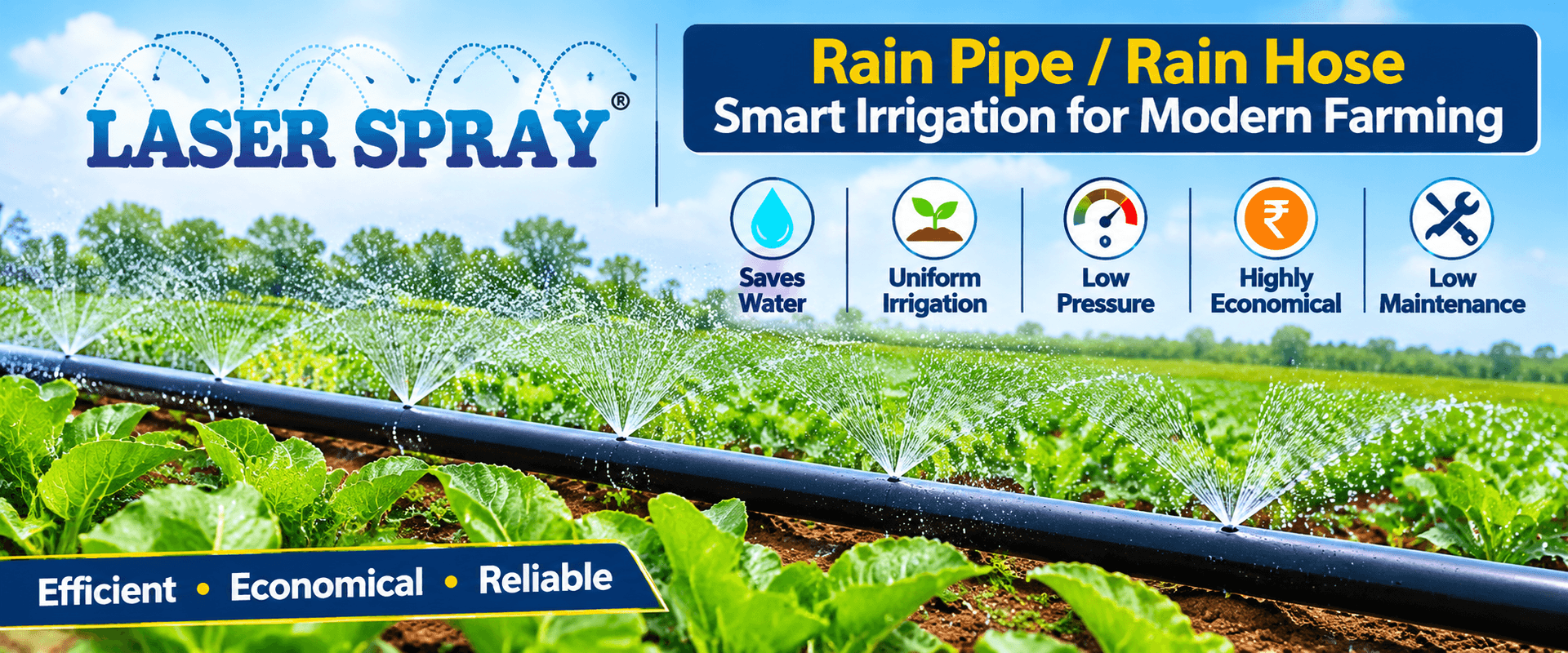
Laser Spray irrigation, also known as Spray irrigation&Rain Pipe/ Rain Hose irrigation, is an advanced form of micro-irrigation that simulates natural rainfall. Laser Spraypipe is made from high-grade polyethylene and features laser-punched holes that release fine water droplets evenly across the field.
It is ideal for close spacing short height crops
It is suitable for crops such as onion, coriander, fenugreek (methi), spinach, other leafy vegetables, radish, carrot, potato and nursery crops etc. It is an effective irrigation solution for crops grown in close spacing, where providing uniform water coverage with conventional drip irrigation methods can be economically challenging.
 Distinctive features of Laser Spray (Rain Pipe / Rain Hose) Irrigation
Irrigates like light rain ( drizzle)
Operates at very low pressure
It operates at 0.7 kg/cm2 as against 1 kg / cm2 and 1.5 to 4 kg/cm2 in case of conventional drip and sprinkler irrigation respectively
Highly economical
It is economical than conventional drip and sprinkler irrigation. It is an affordable irrigation solution for close spacing crops as explained in details below.
Ideal for sandy soil
Sandy soils, notorious for their quick drainage, benefit immensely from the Laser Spray’s thin water distribution on the soil. Water from Laser Spray delivers water evenly and thinly across the soil surface, which reduces the risk of waterlogging and seepage loss.
Laser Spray (Rain Pipe/ Rain Hose) - Economic Advantage Over Drip Irrigation
Laser Spray (Rain Pipe/ Rain Hose) irrigation is significantly more economical than drip irrigation for close spacing crops. Normally, there should be one drip line per crop row or two crop rows due to the limited spread of the water drops in the soil. Therefore, one needs far too many drip lines to cover all the rows in case of close spacing crops. But, each Laser Spray(Rain Pipe/ Rain Hose) tube can cover multiple crop rows and so only a few spray tubes (lines) are sufficient for a large area. Thus, Laser Spray (Rain Pipe/ Rain Hose) irrigation is the practical and economically feasible option for close spacing crops.
Comparison of Laser Spray with traditional Sprinkler Irrigation:
Laser Spray (Rain Pipe/ Rain Hose) runs at very low pressure (@0.7 kg/cm2 whereas sprinklers require 1.5 to 4 kg/cm2.
- This enables Laser Spray (Rain Pipe/ Rain Hose) to run on lower HP pumps
- This also leads to saving of energy.
Laser Spray i.e. Rain Pipe / Rain Hose has low maintenance — no rotating parts or complex mechanisms. Sprinkler systems, on the other hand, have mechanical parts like rotating heads and nozzles that wear out and need regular maintenance.
Most important advantage over sprinkler is the labour saving.
Sprinkler is widely used on shiftable basis. In this method, the farmers typically invest in fewer quantity of sprinkler laterals ( HDPE pipes)and sprinkler heads than required for covering their entire land. They use this limited quantity of the pipes & sprinkler heads for irrigating a section of their fields. Then they manually shift the pipes and sprinkler heads to cover the next section. Thus the entire field is irrigated section by section by manually shifting the spray pipes and sprinkler heads across the field.
This is not called for in case of Laser Spray (Rain Pipe/ Rain Hose). Farmer can afford the materials needed for the entire field at much lower investment and install permanent system for the entire field which is operated only by opening and closing valves. So Laser Spray (Rain Pipe/Rain Hose) is much less labour intensive than traditional sprinkler.
Water drops from Laser Spray (Rain Pipe/ Rain Hose) are very fine. Unlike sprinkler, they do not compact the soil.
Water drops from Laser Spray (Rain Pipe/ Rain Hose) do not harm fruits and flowers being very fine.
Finally, Laser Spray i.e. Rain Pipe / Rain Hose is economical than sprinkler
Parameter | Laser Spray | Traditional Sprinkler |
Operating Pressure | 0.7 kg/cm² | 1.5 to 3.5 kg/cm² |
Pump HP Required | Low | High |
Electricity Consumption | Low | High |
Maintenance | Low (No moving part) | High |
Investment | Highly Economical | Expensive |
Harm to Fruits and Flowers by Water Jets | No | Possible |
Compaction of Soil | No | Possible |
Laser Spray- Unique Agronomic Benefits beyond Irrigation
Laser Spray(Rain Pipe/ Rain Hose) irrigation has many benefits beyond Irrigation:

Supports Photosynthesis: Clean, healthy leaves are key to efficient photosynthesis. By preventing dust buildup on leaves, the Laser Spray(Rain Pipe/ Rain Hose) ensures that your plants absorb sunlight more effectively, enhancing growth and yield.
Washes away Insects: Its rain like watering of the plant washes away the insects resulting in reduction crop protection spray of insecticides.

Boosts Soil Health and Germination: The Laser Spray (Rain Pipe/ Rain Hose) irrigation keeps the soil porous, which improves air circulation around the roots and enhances seed germination.
Cooling the crop: It cools the crop canopy as well as the soil and thus saves the plants form heat stress.
Please see videos on this new Irrigation Technology: Laser Spray (Rain Pipe) Irrigation
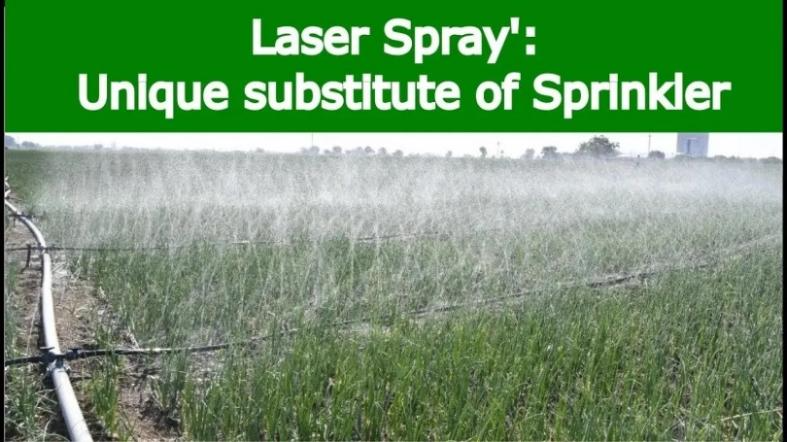
To hear the farmers’ experience, please click on this link: Farmers' amazing experience with Laser Spray
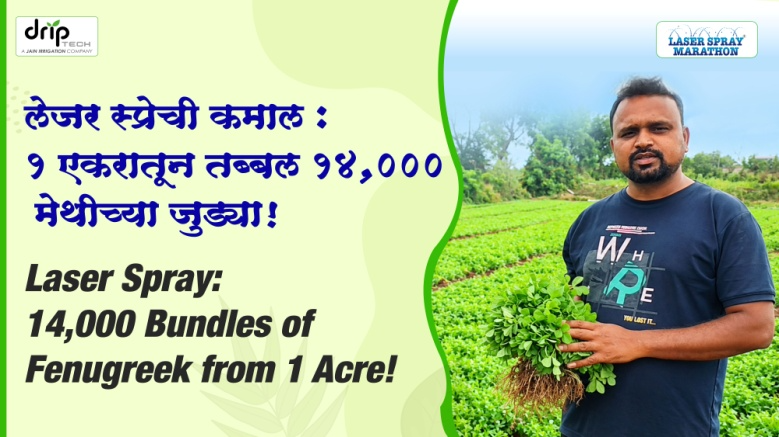 \
Frequently Asked Questions (FAQs)
1. What is Laser Spray (Rain Pipe / Rain Hose) irrigation?
Laser Spray is an irrigation technology that simulates natural rainfall. It uses a polyethylene hose with laser-punched holes to distribute fine water droplets across the field.
2. How is Laser Spray (Rain Pipe / Rain Hose) different from traditional sprinkler irrigation?
Laser Spray operates at a much lower pressure of around 0.7 kg/cm², compared with approximately 1.5–4 kg/cm² for traditional sprinklers.
It has no rotating parts, requires less maintenance
It does not need the manual shifting of sprinkler submain pipes.
It is economical than sprinkler.
3. Is Laser Spray(Rain Pipe / Rain Hose) more economical than drip irrigation?
Laser Spray is economical for closely spaced crops because a single spray line can irrigate multiple crop rows. Drip irrigation generally requires a drip line for each row or two close spaced rows.
4. Does Laser Spray help save electricity or fuel?
Yes. Its low operating pressure can reduce pumping energy requirements compared with conventional sprinkler systems.
5. Can Laser Spray(Rain Pipe / Rain Hose) be used for closely spaced crops?
Yes. It is suitable for crops such as onion, coriander, fenugreek (methi), spinach, other leafy vegetables, radish, carrot, potato and nursery crops etc
6. Can Laser Spray(Rain Pipe / Rain Hose) help keep leaves clean and improve photosynthesis?
Laser Spray washes dust away from leaf surfaces. Cleaner leaves receive sunlight more effectively enhancing photosynthesis which is responsible for yield of the crop.
7. Does Laser Spray help control insects and reduce pesticide use?
The rain-like spray wash some insects off plants, helping reduce certain pest populations.
8. Is Laser Spray suitable for sandy soil ?
Sandy soils, notorious for their quick drainage, benefit immensely from the Laser Spray’s thin water distribution on the soil. Water spreads thinly over the field and not concentrated in one point which reduced the seepage loss drastically.
9. Is Laser Spray suitable hot weather?
Yes. It simulates rain which creates cool micro climate. This can prevent heat tress of the plants in summer.
10. Can Laser Spray damage delicate flowers, fruits, or leafy crops?
Laser Spray produces fine water droplets designed for gentle irrigation and hence, does not damage fruits and flower.