4 दिसंबर 2025
Rain Pipe & Rain Hose Keep Crops Cool | Driptech
How Laser Spray (Rain Pipe / Rain Hose) Irrigation Helps Crops Beat the Summer Heat
Introduction: Beating the Summer Heat with Smart Irrigation
As India’s summers continue to get hotter, farmers face one of the toughest challenges in agriculture crop wilting and yield loss caused by heat stress. Traditional irrigation methods like flood or furrow irrigation only wet the soil; they do little to manage canopy temperature or reduce heat load on plants.
To overcome this challenge, farmers are turning toward Driptech’s Laser Spray (Rain Pipe / Rain Hose) Irrigation System is designed to simulate natural rainfall. It not only irrigates the soil but also cools plant leaves and the surrounding environment, creating a refreshing microclimate that helps crops survive and thrive during peak summer.
This smart irrigation solution is fast becoming the farmer’s best defence against unpredictable weather and extreme heat.
What Is a Crop Cooling Irrigation System?
A crop cooling irrigation system is an innovative technique that uses fine water droplets to reduce heat stress and maintain crop temperature. Unlike traditional systems that focus solely on soil moisture, this technology works on both hydrating roots and cooling foliage.
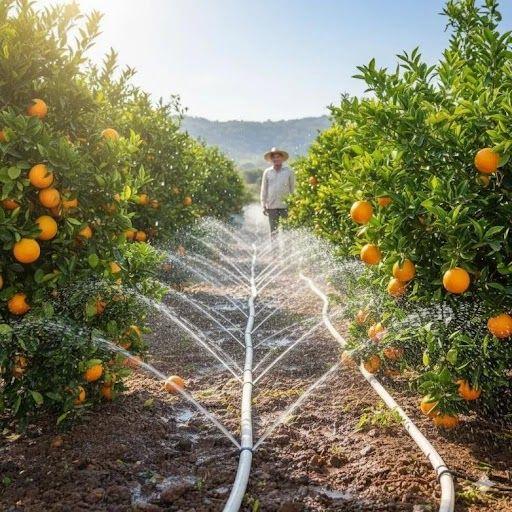
Driptech’s Laser Spray (Rain Pipe / Rain Hose) irrigation is a perfect example of this system. It consists of durable polyethylene pipes with precision laser-punched micro-holes that spray water evenly in a rain-like pattern.
When connected to a moderate-pressure water source, the system creates a soft shower effect across the entire field. This gentle, uniform water distribution ensures both moisture balance and temperature control, keeping crops comfortable even in scorching conditions.
How Laser Spray Irrigation Keeps Crops Cool
The key advantage of the Rain Pipe / Rain Hose (Laser Spray) irrigation system lies in its cooling effect a natural process that helps plants maintain their physiological balance during extreme heat. Let’s understand how it works:
1. Evaporative Cooling Effect
When the fine mist from the rain pipe settles on plant leaves and soil, the water begins to evaporate. During evaporation, heat energy is absorbed from the surroundings, producing a cooling effect similar to natural rainfall. This process lowers the air and leaf temperature, helping plants recover from thermal stress.
2. Leaf Temperature Control
Under direct sunlight, leaf temperature can rise above the air temperature, often causing leaf burn and photosynthetic stress. Laser Spray Irrigation keeps the leaves moist and cool, maintaining an ideal temperature range for photosynthesis, respiration, and transpiration — the three key functions for plant growth.
3. Soil Temperature Regulation
Cooler soil encourages active root respiration, better nutrient uptake, and enhanced microbial activity. The crop cooling irrigation system helps maintain soil temperature stability, resulting in healthier roots and stronger crop stands.
4. Reduced Transpiration Loss
During hot days, plants lose water faster than they can absorb it a condition known as excessive transpiration. The cool environment created by the Laser Spray (Rain Pipe / Rain Hose) Irrigation system minimizes this water loss, ensuring plants stay hydrated longer.
Prevents Summer Wilting and Flower Drop
Summer wilting is one of the most common problems farmers face, particularly with crops like chili, tomato, cotton, and pulses. During high heat, plants tend to droop, lose turgidity, and shed flowers leading to reduced yield and poor fruit set.
The Rain Pipe / Rain Hose (Laser Spray) system effectively tackles this issue. Its fine spray provides both soil moisture and canopy cooling, keeping the plant structure stable and the flowers intact.
Farmers who have adopted this crop cooling irrigation system report visibly greener crops, stronger stems, and longer flowering periods, even during peak summer conditions.
Other Key Benefits of Laser Spray (Rain Pipe / Rain Hose) Irrigation
Beyond cooling, this system offers several advantages that make it ideal for Indian farming conditions:
- Water Efficiency: Saves up to 50% water compared to flood irrigation.
- Low Energy Requirement: Works under low pressure, saving electricity or fuel.
- Easy Installation & operate: Simple to set up, remove, and operate.
- Prevents Soil Erosion: Gentle water spray avoids soil displacement and nutrient loss.
- Improved Photosynthesis: Cooler leaves absorb sunlight efficiently, converting it into more energy for growth.
- Washes away insects: Reduces the need for insect control pesticides spraying.
- Keeps the soil porus: Enhances germination and helps better root growth
Please click in the link below to see a video on farmers’ experience of crop colling by Laser Spray:
https://www.youtube.com/watch?v=jqlNvd6ZK4A
Conclusion: Smart Irrigation for a Hotter Future
Extreme weather conditions are no longer an exception — they’re becoming the norm. For farmers, protecting crops from heat is as crucial as watering them.
Driptech’s Laser Spray (Rain Pipe / Rain Hose) system provides an effective, affordable, and easy-to-use crop cooling irrigation solution that prevents wilting, boosts growth, and ensures higher profits.
By simulating natural rainfall, it creates a cool microclimate that keeps crops healthier and more productive — even during the toughest summer months.
Driptech India – Leading the way toward sustainable, heat-resistant, and high-yield farming with smart irrigation technology.
FAQ
1. What is a Rain Pipe irrigation system?
Rain Pipe irrigation is a low-pressure micro-irrigation system that distributes water through laser-punched holes, creating a gentle rainfall effect for uniform irrigation and crop cooling.
2. How does Rain Pipe help cool crops during summer?
Rain Pipe produces fine water droplets that create an evaporative cooling effect, reducing leaf and canopy temperatures while minimizing heat stress during hot weather.
3. Can Rain Hose irrigation prevent crop wilting?
Yes. Rain Hose irrigation keeps both the soil and crop canopy cool, reducing excessive transpiration, preventing summer wilting, and maintaining healthy plant growth.
4. What is a crop cooling irrigation system?
A crop cooling irrigation system applies a fine spray of water over crops to reduce canopy temperature, improve photosynthesis, and protect plants from extreme summer heat.
5. Does Rain Pipe irrigation save water?
Yes. Driptech Rain Pipe irrigation can save up to 50% water compared to conventional flood irrigation while providing uniform water distribution.
6. Which crops benefit from Rain Pipe crop cooling?
Rain Pipe irrigation is ideal for vegetables, chili, tomato, cotton, pulses, onion, garlic, coriander, leafy vegetables, nurseries, and other closely spaced crops.
7. How does Laser Spray improve crop productivity?
Laser Spray irrigation cools leaves, improves photosynthesis, reduces flower drop, supports healthy root growth, and helps crops produce higher yields during hot weather.
8. Why choose Driptech Rain Pipe and Rain Hose?
Driptech Rain Pipe and Rain Hose use advanced Laser Spray technology to provide uniform irrigation, cool crop canopies, conserve water, reduce insect pressure, improve photosynthesis, and increase crop productivity.